A practical education in modern AI · First edition 2026
Here is every chapter. Decide for yourself.
Nobody selling you an AI guide shows you the contents, because the contents are usually the weakest part of it. This is all ninety-eight, in order, including the ones still being written.
The point
Stop prompting. Start briefing.
Almost every guide you have seen teaches you phrases to type. Magic words. A thousand prompts in a spreadsheet. It does not work, and the reason it does not work is that the phrase was never the hard part.
The hard part is the brief. What you actually want, what the thing needs to know, what good looks like, and what you do when the first answer is wrong. Get that right with a mediocre prompt and you get a good result. Get it wrong with a perfect prompt and you get confident nonsense, delivered with total confidence.
What almost everyone types
Write me a business plan for a candle company
What chapter 1.9 teaches you to type first
Before you write anything, interview me. Ask me the ten questions you need answered to do this properly, one at a time, and do not start until you have them.
Why it works
One loop, and it transfers to everything.
This is what separates people who get something usable out of AI from people who get a paragraph of beige and give up. Learn it once on a holiday itinerary and it works on a planning objection, a landing page, a Unity build and a spreadsheet your accountant sent you. The tools will change next year. This will not.
It closes. What you learn at 06 becomes the context you start 01 with next time.
Proof
Every screenshot in the book is a real one.
Part one alone carries forty-nine captured screens. Not mockups, not illustrations, not a designer's impression of a chat window. Each one has a line above it telling you what you are about to look at, and the ones where it got things wrong are in there too. Four of them are below.
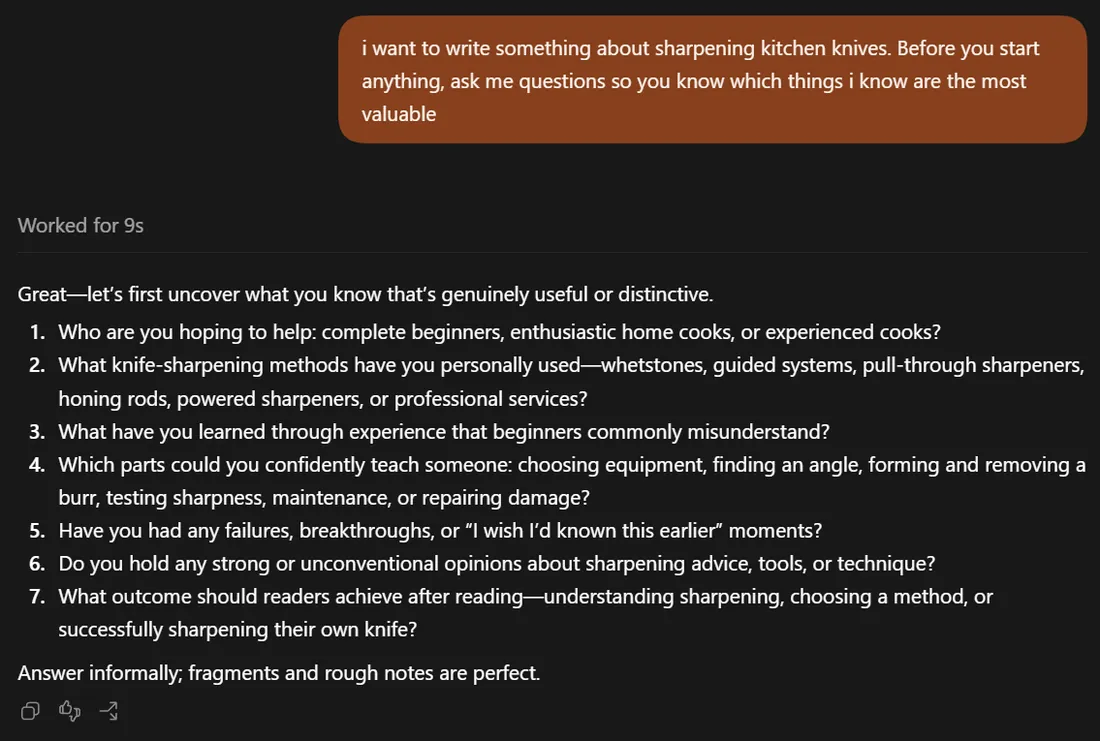
Asked to write something about sharpening kitchen knives, it refuses to start and asks seven questions instead. This is the whole method in one screen.
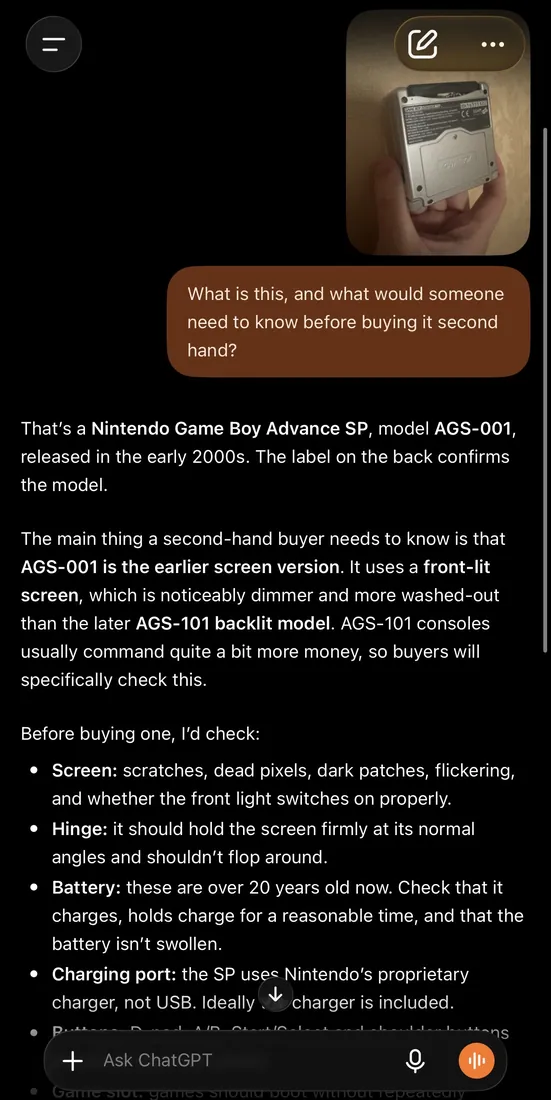
A photograph of something in your hand, and what to check before you buy it.
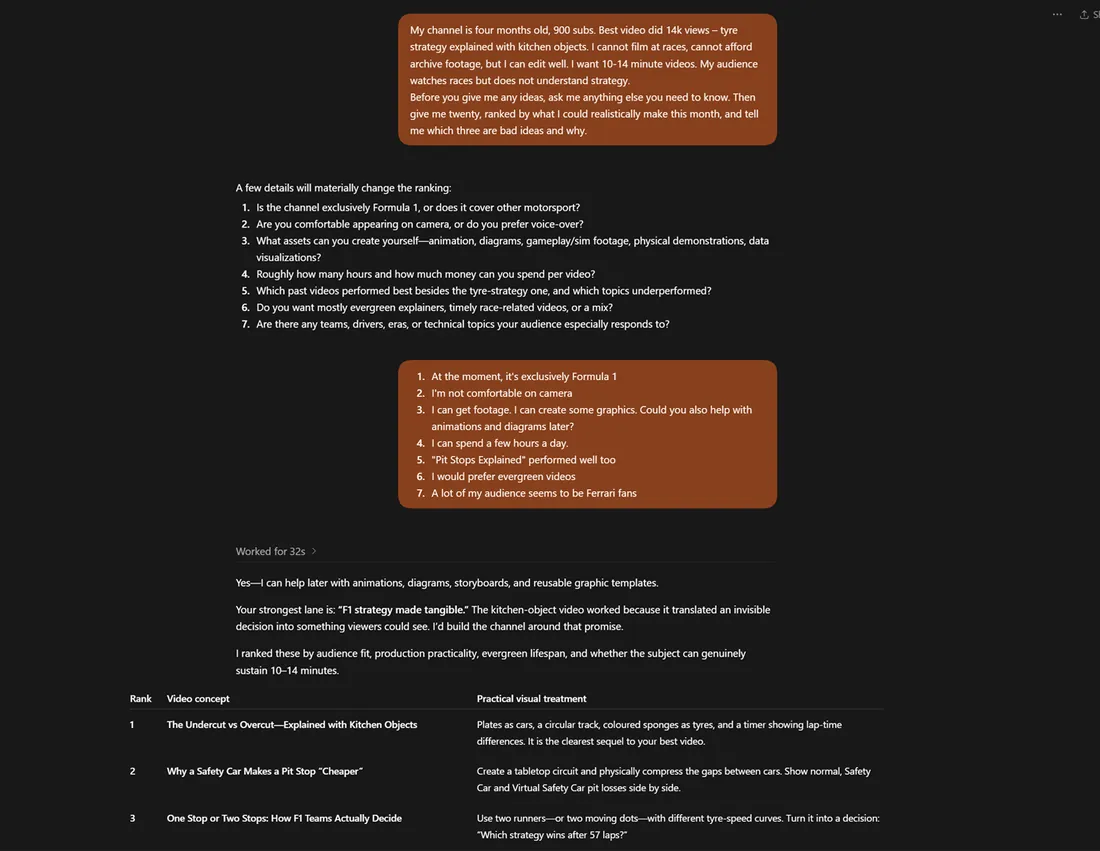
The same technique on a real project of mine: twenty video ideas, ranked, with the channel's angle named without being asked.
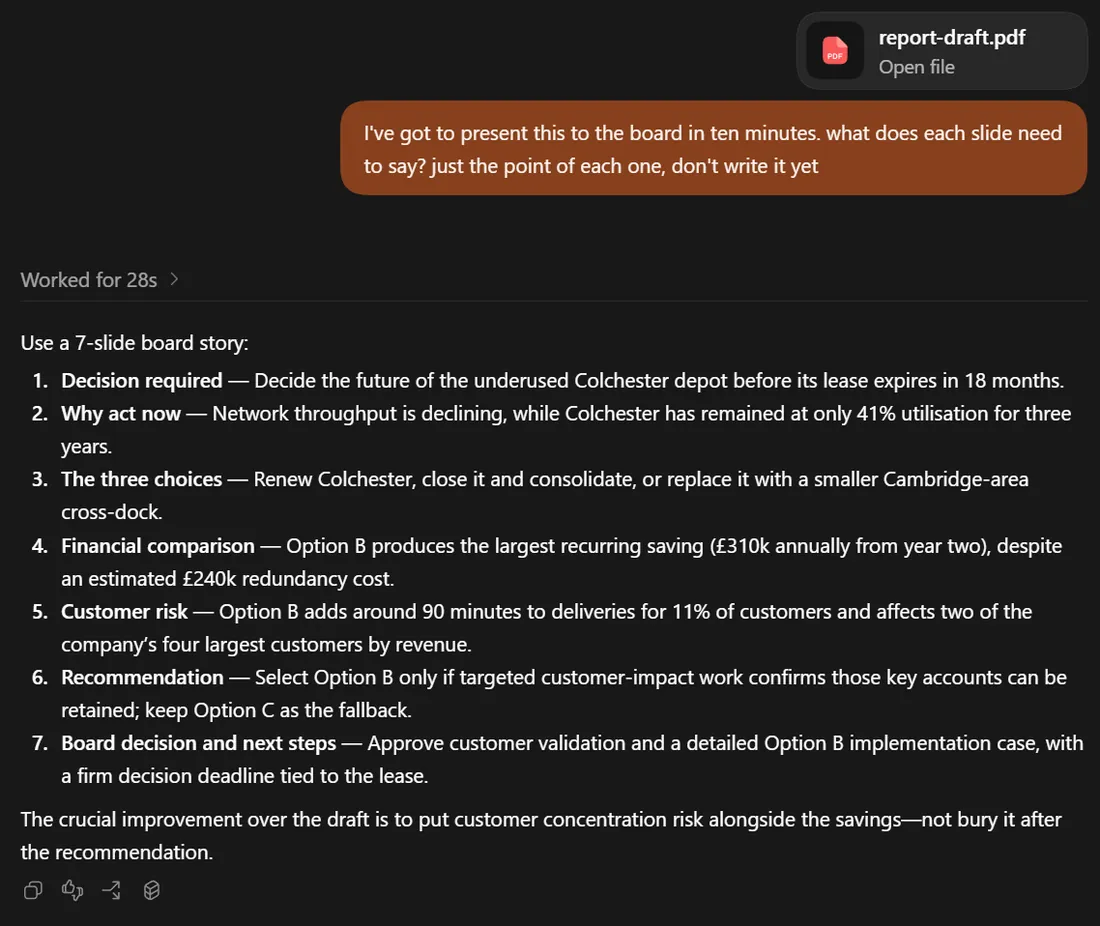
A document you have ten minutes to present, turned into the seven things you actually have to say.
How to do it
Ninety-eight chapters, in the order you would need them.
It opens with two chapters for someone who has never opened an AI app in their life and ends with the things you would build if you wanted to sell something. Filter it, or read the lot.
Do this
The book is not finished. The list is open.
Part one is written, laid out and carrying forty-nine real screenshots. The rest is in build, and the bar above fills as it goes. Leave your email and you get told once, on the day it goes on sale, with a first-week price for the people who waited.
Planned price. One payment, no subscription.
One email when it launches. Nothing else, ever.
What you get
- The complete guide as a PDF you own outright
- Every future edition, free, forever
- The brief library, organised by job
- Templates and checklists as editable files
- A dated tool reference you can replace
Buy it once and every future edition is yours. When a model changes and a chapter goes stale, you get the corrected chapter. There is no second purchase.